
Introducció
This manual provides detailed instructions for the assembly, operation, and maintenance of your Browin 400010 15L Demijohn Wine Making Kit. Please read all instructions carefully before beginning the wine-making process to ensure optimal results and safe use of the equipment. This kit is designed to help both beginners and experienced enthusiasts create high-quality homemade wine.
Components del kit
Your Browin 400010 Wine Making Kit includes the following items:
- 15 L Demijohn in a Plastic Basket: A large glass fermentation vessel protected by a durable plastic basket for easy handling and breakage prevention.
- Demijohn Stopper (Ø 43 mm): A rubber stopper designed to fit the demijohn opening, ensuring an airtight seal.
- Airlock with Protective Cap: A device that allows carbon dioxide to escape during fermentation while preventing outside air and contaminants from entering.
- 10 g Potassium Metabisulfite: An agent used for stabilizing must and wine, and for sanitizing equipment.
- Vinistart Complex: A comprehensive blend containing noble wine yeast, perfectly adjusted nutrients, and pectic enzyme to facilitate juice extraction and wine clarity.
- Hydrometer in a Test Tube: An instrument for measuring the sugar content in the must and wine, helping to determine the potential alcohol strength.
- Siphon Hose with Clamp: A flexible hose with a clamp for easy decanting and bottling of the wine.
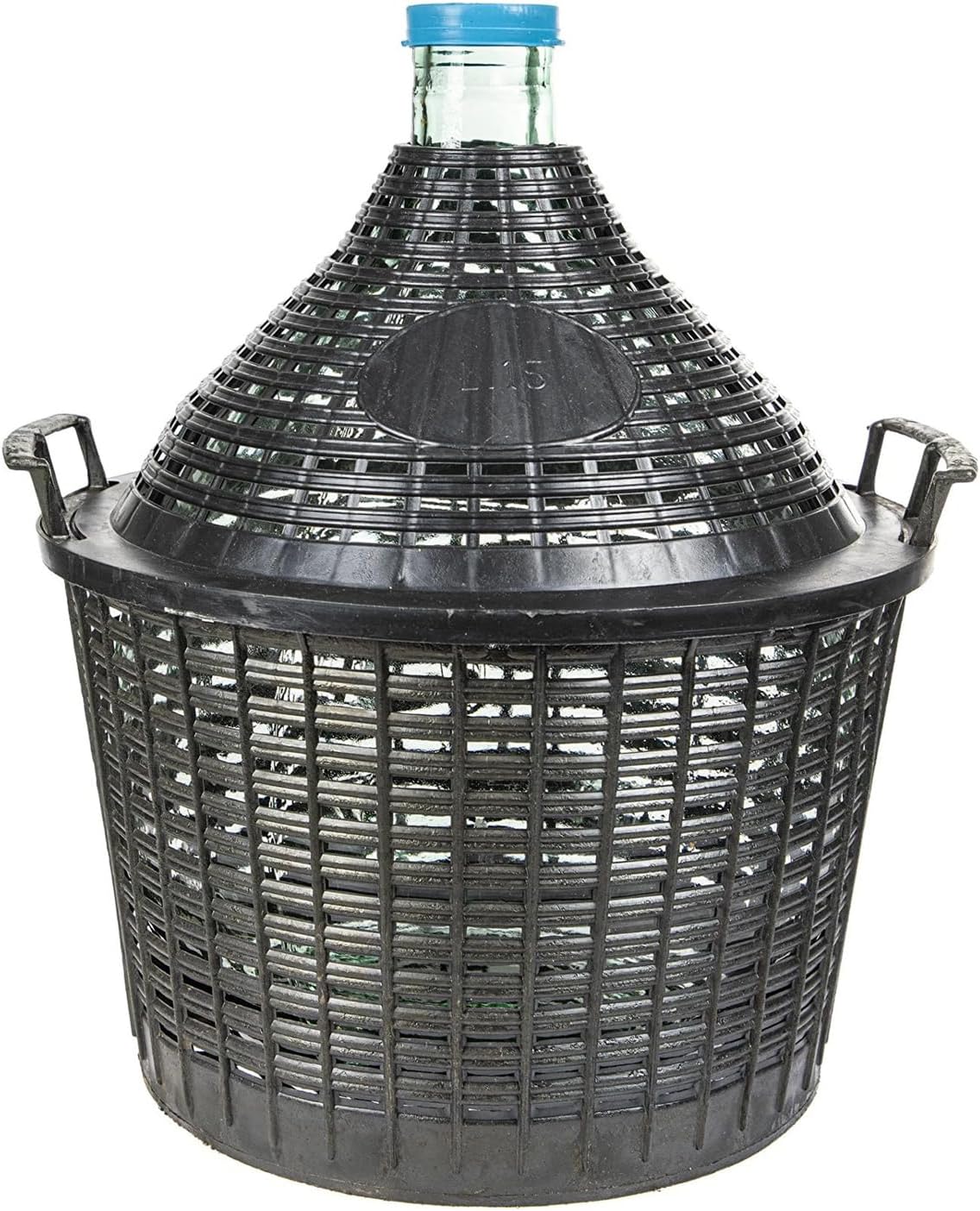
Image: The 15L glass demijohn securely housed within its protective plastic basket.

Image: A close-up of the rubber stopper designed for the demijohn.

Image: The airlock, a crucial component for controlled fermentation, shown with its protective cap.
Precaucions de seguretat
- Manipulació de vidre: The demijohn is made of glass. Handle with care to prevent breakage. The plastic basket provides protection but does not eliminate all risks.
- Avís de temperatura: Never wash the demijohn or other glass accessories with hot water exceeding 50°C (122°F). High temperatures can cause glass to crack or shatter.
- Manipulació de productes químics: Potassium metabisulfite should be handled with care. Avoid direct contact with skin and eyes. Use in a well-ventilated area. Follow instructions on its packaging.
- Fermentation Pressure: Ensure the airlock is properly installed and functioning to release fermentation gases. Blocked airlocks can lead to pressure buildup.
- Nens i animals de companyia: Keep all wine-making equipment and ingredients out of reach of children and pets.
Setup and Sanitization
Proper sanitization is crucial to prevent contamination and ensure successful wine fermentation. Follow these steps before preparing your must:
- Inspeccionar l'equip: Before use, carefully inspect all components for any damage or defects.
- Prepare Sanitizing Solution: Dissolve the 10g of potassium metabisulfite in 1 liter of water to create a sanitizing solution. Alternatively, use a dedicated brewing sanitizer like Oxi Turbo, following its specific instructions.
- Sanitize Demijohn: Pour the sanitizing solution into the 15L demijohn. Swirl it thoroughly to ensure all interior surfaces are coated. Let it sit for 15-20 minutes.
- Desinfectar accessoris: Submerge the stopper, airlock, siphon hose, and any other equipment that will come into contact with the must or wine in the sanitizing solution. Ensure all parts are fully immersed.
- Esbandida: After sanitization, thoroughly rinse all equipment with clean, cool water to remove any sanitizer residue. Allow them to air dry or dry with a clean, lint-free cloth.
- Assemble Airlock: Fill the airlock halfway with clean water or a sanitizing solution. Insert the airlock into the stopper, then firmly place the stopper into the demijohn opening.
Operating Instructions: Wine Making Process
Once your equipment is sanitized, you can begin the wine-making process. This kit provides the essential tools; you will need to supply your fruit, water, and optionally, sugar.
- Prepare the Must:
- Select your desired fruit (e.g., grapes, berries, apples). Wash and prepare the fruit, removing any stems or spoiled parts.
- Crush or press the fruit to extract the juice (must).
- Add water and sugar (if desired, according to your recipe) to achieve the desired volume and initial sugar content.
- Add the Vinistart Complex (yeast, nutrients, pectic enzyme) to the must. The pectic enzyme will help with juice extraction and clarity.
- Measure Sugar Content (Optional but Recommended):
- Use the included hydrometer to measure the initial sugar content of your must. This reading, known as Original Gravity (OG), will help you estimate the final alcohol content of your wine.
- Carefully place the hydrometer into the must (in the test tube provided or a separate sanitized container) and read the scale at the liquid level.
- Fermentació primària:
- Pour the prepared must into the sanitized 15L demijohn. Do not fill completely; leave headspace for fermentation activity (typically 10-20% of the volume).
- Seal the demijohn with the stopper and airlock assembly. Ensure the airlock is filled with water or sanitizing solution.
- Place the demijohn in a cool, dark place with a stable temperature (typically 18-24°C or 65-75°F) for primary fermentation.
- Fermentation will begin within 24-48 hours, indicated by bubbling in the airlock. This phase usually lasts 5-10 days.
- Secondary Fermentation/Aging:
- Once bubbling in the airlock slows significantly or stops, it's time to rack the wine. Use the siphon hose to carefully transfer the wine from the primary demijohn to a clean, sanitized secondary fermentation vessel, leaving behind the sediment (lees) at the bottom.
- Seal the secondary vessel with an airlock and allow the wine to age. This phase can last from several weeks to several months, depending on the wine type and desired maturity.
- During aging, you may perform additional rackings to remove further sediment.
- Stabilization (Optional):
- If desired, you can add a small amount of potassium metabisulfite (following specific recipe guidelines) to stabilize the wine and prevent spoilage before bottling.
- Embotellament:
- When the wine is clear and stable, it's ready for bottling. Sanitize your wine bottles and corks.
- Use the siphon hose with its clamp to carefully transfer the finished wine into bottles, filling them to the appropriate level.
- Cork the bottles and store them in a cool, dark place.
Manteniment i Neteja
Proper cleaning and storage of your equipment will ensure its longevity and prevent contamination in future batches.
- Neteja immediata: After each use, thoroughly clean all equipment, especially the demijohn, siphon hose, and airlock, to prevent dried residue from becoming difficult to remove.
- Demijohn Cleaning: Rinse the demijohn with cool water immediately after emptying. For stubborn residues, use a demijohn brush and a mild, unscented cleaning solution. Remember the 50°C temperature limit for glass.
- Airlock and Hose Cleaning: Disassemble the airlock and clean all parts. Flush the siphon hose with water. A small brush can help clean narrow tubes.
- Assecat: Deixeu que tots els components s'assequin completament a l'aire abans de guardar-los per evitar el creixement de floridura o fongs.
- Emmagatzematge: Store the clean, dry equipment in a cool, dark, and dust-free environment.
Resolució de problemes
- No bubbling in airlock:
- Comprovació del segell: Ensure the stopper and airlock are tightly sealed. Leaks can prevent bubbling.
- Temperatura: Fermentation may be too cold. Move the demijohn to a warmer location (within recommended range).
- Yeast Activity: Yeast may be inactive or dead. Ensure Vinistart Complex was added correctly and not exposed to extreme temperatures.
- Fermentation Finished: If several days have passed, fermentation might be complete. Check with a hydrometer.
- Olor desagradable:
- Higienització: This often indicates contamination. Ensure all equipment is thoroughly sanitized before use.
- Spoilage: If the odor is strong and off-putting, the batch may be spoiled.
- Cloudy Wine:
- Sediment: Rack the wine to a clean vessel, leaving sediment behind. Repeat if necessary.
- Pectic Haze: The pectic enzyme in Vinistart Complex helps, but some fruits may still cause haze. Time and cold conditioning can help.
- Yeast Haze: Fine yeast particles can cause cloudiness. Aging and racking will help them settle.
Especificacions
| Número de model: | 400010 |
| Marca: | Browin |
| Capacitat: | 15 litres |
| Dimensions del producte: | 36 cm (amplada) x 45 cm (alçada) |
| Pes del producte: | 10 grams (Note: This weight likely refers to a specific component or packaging detail, not the full kit.) |
| Material: | Glass demijohn, plastic basket, rubber stopper, plastic airlock, plastic hose |
| Ús previst: | Home wine making, DIY wine projects |
Garantia i Suport
For information regarding warranty coverage, technical support, or replacement parts for your Browin 400010 Wine Making Kit, please refer to the manufacturer's official weblloc web o poseu-vos en contacte amb el seu departament d'atenció al client. Conserveu el rebut de compra com a comprovant de compra.
Manufacturer: Browin
Per obtenir més ajuda, visiteu el Browin Brand Store on Amazon.