
1. Introducció
This manual provides essential information for the proper installation, operation, and maintenance of your LadyCent Tire Pressure Monitoring System (TPMS) sensor, model 3641100XKR02A. This sensor is designed to monitor the internal pressure of your vehicle's tires, contributing to driving safety and optimal tire performance. Please read these instructions carefully before installation and use.
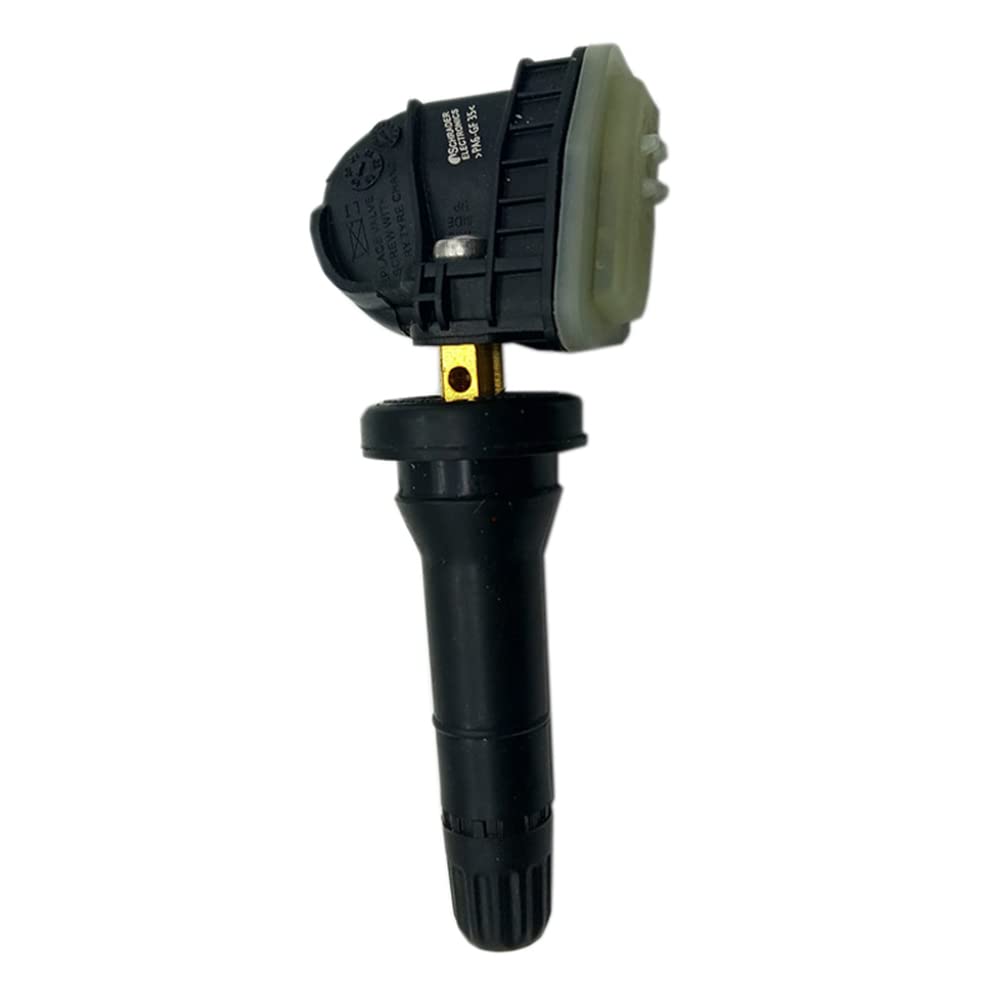
Figure 1: LadyCent TPMS sensor and a visual representation of the tire pressure warning light.
2. Producte acabatview
2.1 Contingut del paquet
- 1 x LadyCent Car Tire Pressure Sensor TPMS (Model: 3641100XKR02A)
Note: Other products or tools required for installation are not included.
2.2 Característiques clau
- Precise and Stable Monitoring: Designed to accurately monitor tire internal pressure, providing real-time data for vehicle safety.
- High Accuracy and Sensitivity: Ensures reliable performance and durability.
- Preprogramat: Sensors come pre-programmed for specific vehicle makes, models, and years, requiring activation or a re-learning process after installation.
- Reduced Fuel Consumption: Proper tire pressure, maintained through TPMS monitoring, helps prevent premature tire wear and reduces rolling resistance, thereby optimizing fuel efficiency.
- Substitució directa: Engineered for direct replacement of original equipment (OE) sensors.

Figura 2: lateral view of the LadyCent TPMS sensor, highlighting its compact design.
3. Especificacions
| Número de model | 3641100XKR02A |
| Reference OE Number | 3641100XKR02A |
| Marca | LadyCent |
| Material | Metall i plàstic |
| Freqüència | 433MHz (as indicated on sensor image) |
3.1 Vehicles compatibles
This TPMS sensor is compatible with various Great Wall Haval models. Please verify the OE number (3641100XKR02A) against your vehicle's requirements before installation.
- Haval F5 (2018-2020)
- Haval F7 (2018-2020)
- Haval F7X (2019-2020)
- Haval H2s (2016-2020)
- Haval H4 (2017-2019)
- Haval H6 (2017-2019)
- Haval H7L (2017-2019)
- Haval VV5
- Haval VV6
- Haval VV7
4. Configuració i instal·lació
Installation of TPMS sensors typically requires specialized tools and expertise. It is highly recommended that installation be performed by a qualified automotive technician.
4.1 Notes prèvies a la instal·lació
- Ensure the vehicle is parked on a flat, stable surface with the engine off and parking brake engaged.
- Confirm that the replacement sensor's OE number matches the original sensor or is specified as compatible for your vehicle.
- Be aware that after installation, the new sensors will need to be activated or undergo a "re-learning" process to communicate with your vehicle's TPMS module.
4.2 Passos d'instal·lació (Guia general)
- Remove Wheel and Tire: Safely lift the vehicle and remove the wheel from which the sensor is being replaced. Deflate the tire completely.
- Dismount Tire: Using appropriate tire changing equipment, carefully dismount the tire from the wheel rim, paying attention to avoid damaging the existing sensor if it's still present.
- Treure el sensor antic: If replacing an old sensor, remove the retaining nut and pull the old sensor assembly out of the valve stem hole.
- Instal·leu un sensor nou: Insert the new LadyCent TPMS sensor through the valve stem hole from the inside of the rim. Ensure the sensor body is correctly oriented within the wheel.
- Secure Sensor: Hand-tighten the retaining nut onto the valve stem from the outside of the rim. Then, use a torque wrench to tighten to the manufacturer's specified torque (consult your vehicle's service manual for exact specifications).
- Mount Tire: Carefully mount the tire back onto the wheel rim, ensuring the sensor is not pinched or damaged during the process.
- Inflar el pneumàtic: Inflate the tire to the vehicle manufacturer's recommended pressure.
- Re-install Wheel: Mount the wheel back onto the vehicle and tighten lug nuts to specifications.

Figura 3: superior view of the LadyCent TPMS sensor, illustrating its integrated design.
4.3 Sensor Re-learning Process
After installing new TPMS sensors, your vehicle's TPMS module needs to recognize them. This is known as the re-learning or activation process. The method varies by vehicle manufacturer:
- Auto Re-learn: Some vehicles are equipped with an automatic re-learn feature. After driving for a certain distance (e.g., 10-20 minutes at speeds above 15 mph), the vehicle's system may automatically detect and register the new sensors.
- Manual Re-learn: Other vehicles require a manual re-learn procedure, often involving specific steps with the ignition, brake pedal, or a TPMS reset button.
- OBD-II Re-learn: Some vehicles require a specialized TPMS diagnostic tool to program or activate the sensors via the OBD-II port.
Consult your vehicle's owner's manual or a qualified technician for the specific re-learning instructions for your make and model. Failure to perform the re-learning process will result in the TPMS warning light remaining illuminated.
5. Instruccions de funcionament
Once properly installed and re-learned, the LadyCent TPMS sensor will continuously monitor your tire pressure. The system operates automatically, transmitting tire pressure data to your vehicle's onboard computer.
- Funcionament normal: Under normal conditions, with correct tire pressures, the TPMS warning light on your dashboard should remain off.
- Low Pressure Warning: If one or more tires fall below the recommended pressure threshold, the TPMS warning light will illuminate on your dashboard. This indicates that immediate attention is required.
- Mal funcionament del sensor: If the TPMS warning light flashes for a period and then stays illuminated, it may indicate a system malfunction or a faulty sensor.
Upon a low-pressure warning, safely pull over and check your tire pressures. Inflate tires to the recommended pressure as indicated on your vehicle's door jamb placard or owner's manual. If the light persists after inflation, or if it indicates a malfunction, consult a professional.
6. Manteniment
Proper maintenance of your tires and TPMS sensors ensures their longevity and accurate performance.
- Regular Tire Pressure Checks: Even with TPMS, it is good practice to manually check your tire pressures monthly with a reliable gauge.
- Tire Rotations and Replacements: When rotating or replacing tires, ensure that the TPMS sensors are handled carefully. It is often recommended to replace the valve stem service kit (grommet, washer, nut, valve cap) whenever a tire is serviced to prevent leaks.
- Vida útil del sensor: TPMS sensors are battery-powered. The battery life typically ranges from 5 to 10 years, depending on usage and environmental factors. When the battery depletes, the sensor will need to be replaced.
- Eviteu productes químics durs: Do not use harsh chemicals or abrasive cleaners on the valve stems or sensor components, as this can cause damage.

Figura 4: Un altre view of the LadyCent TPMS sensor, emphasizing its robust construction.
7. Solució De Problemes
If you encounter issues with your TPMS, refer to the following common troubleshooting steps:
| Problema | Causa possible | Solució |
|---|---|---|
| TPMS warning light is on (solid). | Low tire pressure in one or more tires. | Check all tire pressures and inflate to recommended levels. Drive the vehicle to allow the system to update. |
| TPMS warning light flashes, then stays solid. | TPMS system malfunction or sensor battery low/dead. Sensors not properly re-learned. | Perform the re-learning procedure for your vehicle. If the issue persists, have the system diagnosed by a professional. Sensors may need replacement. |
| New sensors not detected after installation. | Re-learning procedure not completed or performed incorrectly. Sensor not activated. | Ensure the re-learning process specific to your vehicle has been followed correctly. Drive the vehicle as required for auto re-learn. A professional TPMS tool may be needed for activation. |
| Lectures de pressió inexactes. | Faulty sensor, external interference, or incorrect re-learning. | Verify readings with a calibrated manual gauge. Re-perform re-learning. If discrepancies continue, sensor may be faulty and require replacement. |
For complex issues or if troubleshooting steps do not resolve the problem, it is recommended to seek assistance from a certified automotive technician.
8. Garantia i assistència
LadyCent is committed to providing quality products and customer satisfaction. For any questions, concerns, or technical assistance regarding your TPMS sensor, please utilize our customer support services.
- Atenció al client: LadyCent offers 24-hour online service. Please refer to your purchase platform or product packaging for specific contact details.
- Informació de la garantia: Els termes i condicions específics de la garantia poden variar. Si us plau, conserveu el comprovant de compra per a reclamacions de garantia.