
Introducció
This user manual provides comprehensive instructions for the installation, operation, and maintenance of your Cuifati ATX B75A Motherboard. Please read this manual thoroughly before proceeding with installation to ensure proper setup and optimal performance. This motherboard is designed for desktop systems, supporting LGA1155 processors and DDR3 memory.
Producte acabatview i Característiques clau
The Cuifati ATX B75A Motherboard offers a robust platform for your desktop computing needs. Key features include:
- Sortida de vídeo d'alta definició: Equipped with VGA and HD Multimedia Interface ports for digital high-definition video output.
- Connectivitat rica: Features 2 x DDR3 memory slots, 1 x SATA3.0, 3 x SATA2.0 hard disk interfaces, and a total of 10 USB interfaces (including USB 3.0).
- Capacitat de xarxa: Supports a 100M network card interface for reliable internet connectivity.
- Subministrament d'energia estable: Utilizes multiphase power design for enhanced stability and efficiency.
- Fàcil instal·lació: Constructed with premium printed circuit board material for durability and straightforward setup.
- NVMe M.2 Support: Includes an NVMe M.2 slot for high-speed storage solutions.
- PCIe 16X Slot: Provides a dedicated slot for graphics cards.

Figura 1: De dalt a baix view of the Cuifati ATX B75A Motherboard, showcasing the CPU socket, DDR3 memory slots, PCIe slot, and various ports.

Figura 2: Acabatview of the Cuifati B75A Motherboard highlighting key features such as 2xDDR3, 1xNVMe M.2, 1xPCIe 16X, 1xSATA3.0, 1xVGA, 1xWiFi M.2, 1xHDMI, and 3xSATA2.0.

Figura 3: Diagram illustrating product features including Intel LGA 1155 socket, DDR3 memory support, WiFi M.2, PCIe 16X, SATA 3.0 and 2.0 ports, and NVMe M.2 slot.

Figura 4: Placa base view accompanied by icons representing solid state capacitance for stability, 100M network card, front USB 3.0 interface, and VGA/HD Multimedia Interface.
Especificacions tècniques
| Característica | Detall |
|---|---|
| Marca | Cuifati |
| Nom del model | Cuifatipg823zgbh9 |
| Socket de CPU | LGA 1155 |
| Processadors compatibles | Intel Core 2 DUO (and other LGA 1155 compatible CPUs) |
| Tipus de xipset | Intel B75 Express |
| Tecnologia de memòria RAM | DDR3 |
| Velocitat de rellotge de memòria | Fins a 2400 MHz (OC) |
| Capacitat d'emmagatzematge de memòria (màx.) | 16 GB |
| Dimensions del producte | 6.69 x 6.69 x 6.7 polzades |
| Pes de l'article | 1.1 lliures |
| Sortida de vídeo | VGA, HD Multimedia Interface |
| Interfícies d'emmagatzematge | 1 x SATA3.0, 3 x SATA2.0, 1 x NVMe M.2 |
| Ranures d'expansió | 1 x PCIe 16X |
| Interfícies USB | Multiple USB 2.0 and USB 3.0 ports |
| Xarxa | 100M Ethernet |
| Plataforma | Windows 10 compatible |
Guia de configuració
Follow these steps to properly install your Cuifati ATX B75A Motherboard into your computer system.

Figura 5: Detailed diagram highlighting key components and connectors on the motherboard, including CPU Slot, DDR3 Memory Slots, 24PIN CPU Power Supply, SATA ports, NVMe M.2, USB ports, HDMI, VGA, and front panel connectors. Refer to this diagram for component locations during installation.
1. Preparació
- Ensure your power supply is disconnected from the wall outlet.
- Reuneix les eines necessàries: tornavís Phillips, corretja antiestàtica per al canell (recomanada).
- Prepare your computer case by removing the side panel.
2. Instal·lació de la CPU
- Locate the LGA 1155 CPU socket on the motherboard (refer to Figure 5).
- Aixequeu suaument la palanca de la placa de càrrega i obriu-la.
- Carefully align your LGA 1155 processor with the socket, ensuring the gold triangle on the CPU matches the indicator on the socket. Do not force the CPU into the socket.
- Tanqueu la placa de càrrega i assegureu-la amb la palanca.
- Apply thermal paste to the CPU and install the CPU cooler according to its manufacturer's instructions.
3. Instal·lació de memòria (RAM)
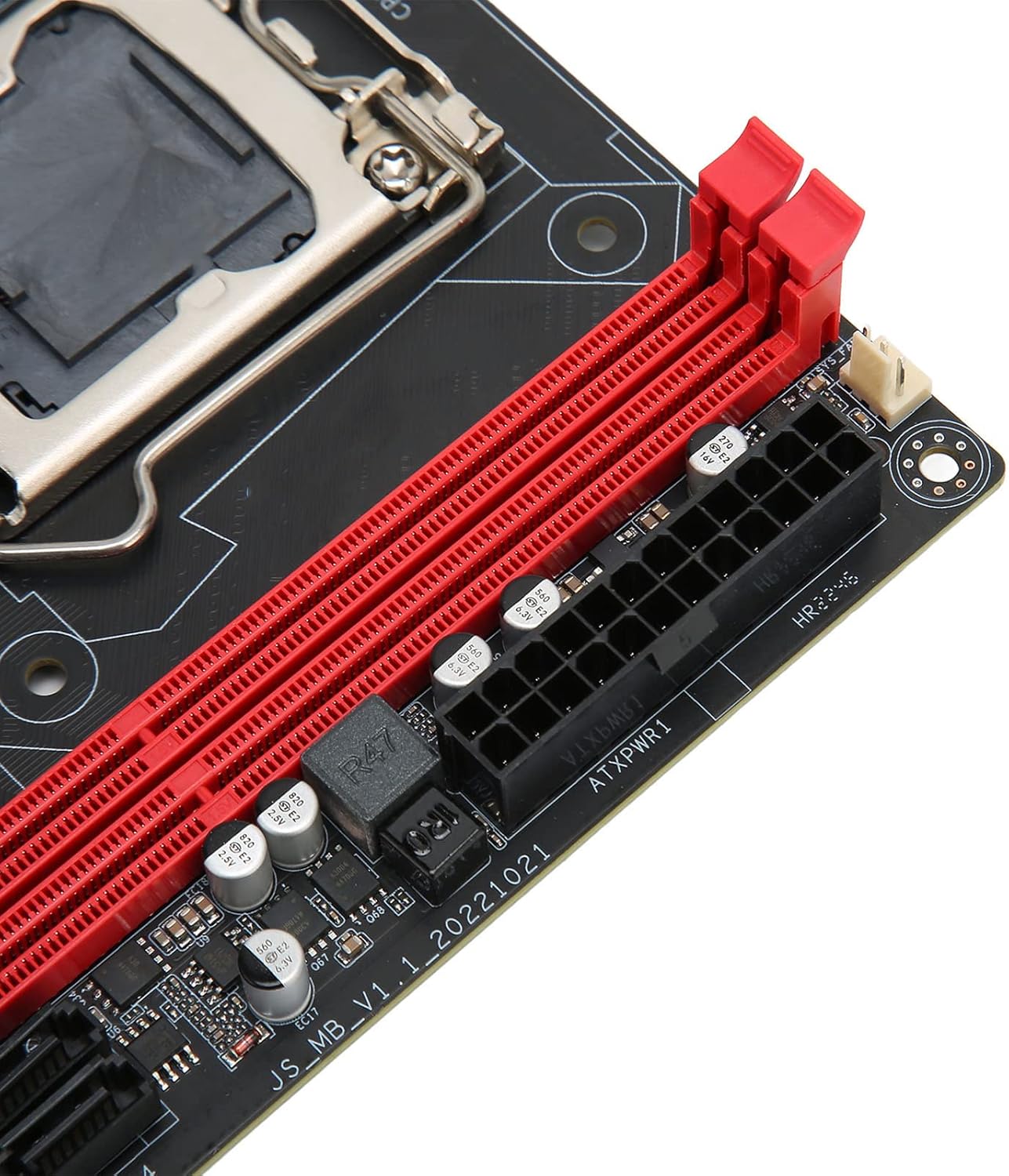
Figura 6: Primer pla view of the DDR3 memory slots and the 24-pin ATX power connector, essential for RAM and main power connections.
- Identify the DDR3 memory slots (refer to Figure 5 and Figure 6).
- Obriu els clips dels dos extrems de la ranura de memòria.
- Alineeu l'osca del mòdul de memòria DDR3 amb la clau de la ranura de memòria.
- Premeu fermament els dos extrems del mòdul de memòria fins que els clips encaixin al seu lloc.
4. Instal·lació de la placa base a la caixa
- Instal·leu la placa d'E/S a l'obertura posterior de la carcassa de l'ordinador.
- Carefully place the motherboard into the case, aligning the screw holes with the standoffs.
- Fixeu la placa base amb cargols. No els estrenyeu massa.
5. Connexions de la font d'alimentació
- Connect the 24-pin ATX power connector from your power supply to the 24PIN CPU Power Supply header on the motherboard (refer to Figure 5 and Figure 6).
- Connect the 4-pin or 8-pin CPU power connector (if applicable) to the 4PIN Power Supply header near the CPU socket.
6. Storage Device Connections
- Connect your SATA storage devices (HDDs/SSDs) to the SATA3.0 (1 port) or SATA2.0 (3 ports) connectors on the motherboard using SATA data cables (refer to Figure 5).
- If using an NVMe M.2 SSD, insert it into the NVMe M.2 slot and secure it with the provided screw (refer to Figure 5).
7. Connexions del panell frontal
Connect the front panel cables (Power SW, Reset SW, Power LED, HDD LED, Front USB, Front Audio) to their respective headers on the motherboard. Refer to Figure 5 for the location of these headers.
- POTÈNCIA SW: Connects to the power button on your case.
- RESET SW: Connects to the reset button on your case.
- LED d'alimentació: Connects to the power indicator light. Observe polarity.
- LED HDD: Connects to the hard drive activity indicator light. Observe polarity.
- USB frontal: Connects to the front USB ports on your case.
- Àudio frontal: Connects to the front audio jacks on your case.
8. Targetes d'expansió
If installing a dedicated graphics card or other PCIe expansion cards, insert them into the PCIe 16X slot and secure them with the case's retention mechanism (refer to Figure 5).
9. Comprovacions finals

Figura 7: Primer pla view of the rear I/O panel, showing various ports including USB, Ethernet, VGA, and HD Multimedia Interface, where external devices will connect.
- Comproveu totes les connexions per assegurar-vos que són segures.
- Ensure no loose screws or cables are obstructing fans or components.
- Close the computer case side panel.
Instruccions de funcionament
Once the motherboard and all components are correctly installed, you can proceed with operating your system.
1. Engegada inicial
- Connect your monitor, keyboard, and mouse to the appropriate ports on the rear I/O panel (refer to Figure 7).
- Connect the power cable to your power supply and plug it into a wall outlet.
- Premeu el botó d'engegada de la caixa de l'ordinador.
- The system should power on, and you should see output on your monitor.
2. Configuració de la BIOS/UEFI
Upon initial boot, you may need to enter the BIOS/UEFI setup to configure settings such as boot order, date/time, and enable specific features. Typically, you can access BIOS by pressing the DEL or F2 key repeatedly during startup.
3. Instal·lació del sistema operatiu
Install your preferred operating system (e.g., Windows 10) from a bootable USB drive or DVD. Follow the on-screen instructions provided by the operating system installer.
4. Instal·lació del controlador
After installing the operating system, install the necessary drivers for the motherboard chipset, audio, network, and any dedicated graphics cards. These drivers are usually provided on a CD/DVD with your components or can be downloaded from the manufacturer's webllocs.
Manteniment
Proper maintenance ensures the longevity and stable performance of your motherboard and overall system.
- Mantingueu-lo net: Regularly clean the interior of your computer case to prevent dust buildup on components, especially heatsinks and fans. Use compressed air for this purpose.
- Assegureu-vos un flux d'aire adequat: Make sure your computer case has adequate ventilation and that fans are operating correctly to prevent overheating.
- Actualitzar els controladors: Periodically check for and install the latest drivers for your motherboard chipset, graphics card, and other peripherals to ensure optimal performance and compatibility.
- Actualitzacions de la BIOS/UEFI: Only update the BIOS/UEFI if necessary, and follow the manufacturer's instructions precisely. Incorrect BIOS updates can render your motherboard inoperable.
- Evita l'estrès físic: Handle the motherboard with care. Avoid bending or applying excessive force to components or connectors.
Resolució de problemes
Aquesta secció ofereix solucions a problemes comuns que podeu trobar.
Sense alimentació / El sistema no s'encén
- Comproveu les connexions d'alimentació: Ensure the 24-pin ATX power connector and the 4-pin/8-pin CPU power connector are securely seated on the motherboard.
- Font d'alimentació: Verify that the power supply is switched on and connected to a working power outlet. Test the power supply if possible.
- Connexions del panell frontal: Double-check the POWER SW header connection on the motherboard.
- Curtcircuit: Remove the motherboard from the case and test it on a non-conductive surface (e.g., cardboard box) with only essential components (CPU, one RAM stick, CPU cooler, power supply). This helps rule out short circuits caused by the case.
Sense sortida de visualització
- Connexió del monitor: Ensure the monitor is properly connected to the VGA or HD Multimedia Interface port on the motherboard (or dedicated graphics card) and is powered on.
- RAM: Reseat the DDR3 memory modules. Try booting with only one RAM stick.
- Targeta gràfica: If using a dedicated graphics card, ensure it is properly seated in the PCIe 16X slot and has auxiliary power connected (if required).
- Configuració de la BIOS: If you have a dedicated graphics card, ensure the BIOS is configured to use it as the primary display output.
System Instability / Random Crashes
- Sobreescalfament: Check CPU and case temperatures. Ensure CPU cooler is properly installed and fans are working. Clean dust from heatsinks.
- Problemes de RAM: Executeu una eina de diagnòstic de memòria per comprovar si hi ha mòduls de RAM defectuosos.
- Problemes del controlador: Assegureu-vos que tots els controladors estiguin actualitzats i instal·lats correctament.
- Font d'alimentació: An insufficient or failing power supply can cause instability.
Slow Performance / Lagging
- Emmagatzematge: Check the health of your storage drives (HDD/SSD). Ensure the operating system is installed on a fast drive (e.g., NVMe M.2 SSD).
- CPU/RAM Usage: Monitor CPU and RAM usage to identify resource-intensive applications.
- Conductors: Outdated drivers can sometimes lead to performance issues.
- Sistema operatiu: Ensure your operating system is optimized and free from malware.
Garantia i Suport
For warranty information and technical support, please refer to the documentation provided with your purchase or visit the official Cuifati weblloc web. Conserveu el comprovant de compra per a reclamacions de garantia.
For further assistance, you may contact Cuifati customer support through their official channels. Please have your product model number (Cuifatipg823zgbh9) and purchase details ready.