1. Introducció i finalview
Aquest manual ofereix un sobreview and guide to understanding the book Regret the Error: How Media Mistakes Pollute The Press And Imperil Free Speech by Craig Silverman. The book delves into the pervasive issue of errors in media reporting, from newspapers to broadcast, and their impact on public trust and the integrity of free speech.
It explores the origins of these mistakes, their various forms, and potential strategies for minimizing their occurrence. The content is designed to inform readers about the critical analysis presented within the book regarding journalistic accuracy and accountability.
2. About the Book
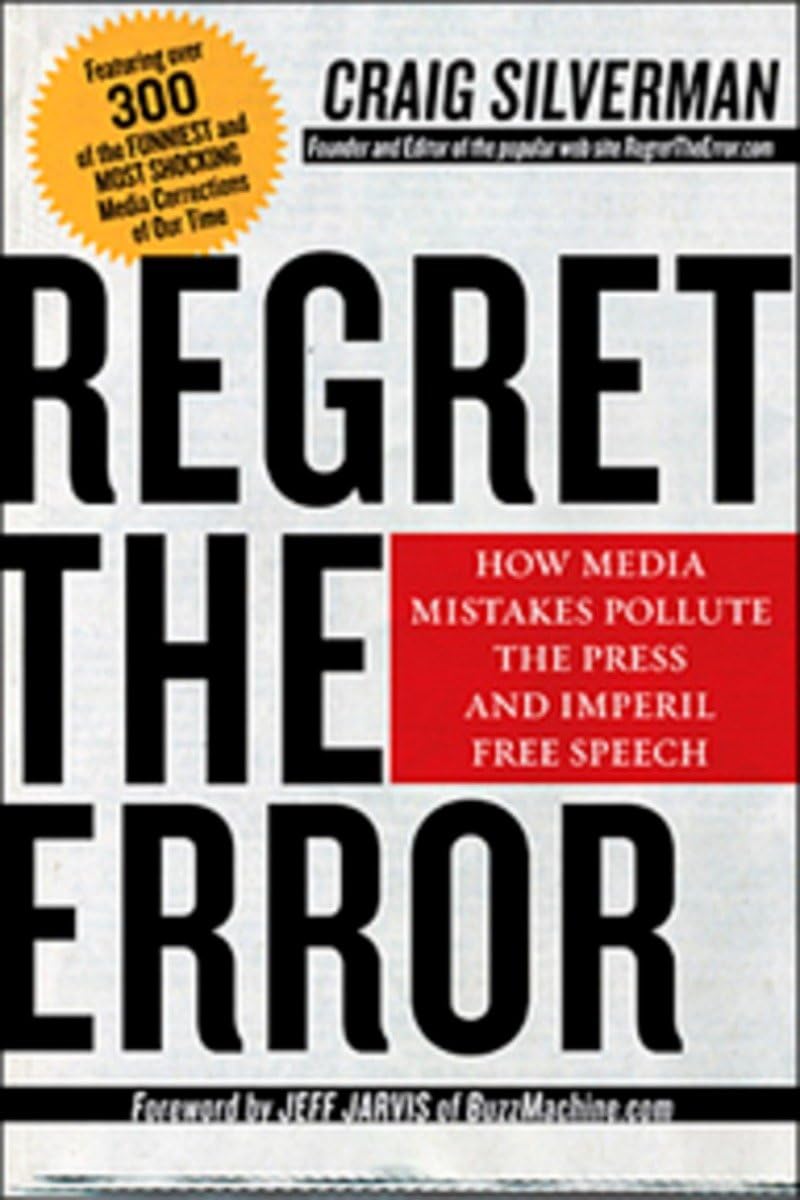
Image 1: Front cover of "Regret the Error" by Craig Silverman. The cover features the title in prominent black lettering, with a red rectangular section containing the subtitle.
Regret the Error examines the common phrase used in media to acknowledge mistakes. Author Craig Silverman, founder and editor of RegretTheError.com, investigates the underlying causes and consequences of journalistic errors. The book presents a historical perspective on media mistakes, illustrating them with examples ranging from humorous to tragic.
It categorizes various types of errors, such as "Fuzzy Numbers" (numerical inaccuracies), "Obiticide" (premature obituaries), and "Unidentified Consequences" (typos leading to factual inaccuracies). Silverman argues that while some errors are inadvertent, others stem from ethical lapses or systemic issues within news organizations, including the decline of traditional fact-checking processes.
3. Key Concepts and Themes
The book explores several critical themes related to media accuracy and its societal impact:
- The Nature of Media Errors: Distinguishing between unintentional mistakes and those resulting from negligence or ethical failures.
- Impact on Public Trust: How repeated errors erode credibility and public confidence in news sources.
- Evolution of Fact-Checking: Analysis of the historical decline of internal fact-checking mechanisms and the rise of external scrutiny from readers and interest groups.
- Call for Accountability: Silverman advocates for news organizations to improve their practices and restore their role as reliable sources of information.
- Free Speech Implications: The argument that a careless press can imperil the very principles of free speech by disseminating misinformation.
4. Book Structure and Navigation
The book is structured to guide the reader through a comprehensive analysis of media errors. It typically progresses from historical context and anecdotal examples to a deeper examination of the causes and potential solutions. Readers can navigate the book by focusing on specific categories of errors or by following Silverman's arguments on media responsibility and the importance of accuracy.
While there is no formal "setup" or "operating" procedure for a book, engaging with the content involves critical reading and reflection on the presented case studies and analyses.
5. Especificacions
| Atribut | Detall |
|---|---|
| Títol | Regret the Error: How Media Mistakes Pollute The Press And Imperil Free Speech |
| Autor | Craig Silverman |
| Editor | Viking |
| Data de publicació | 23 d'octubre de 2007 |
| Edició | Primera Edició |
| Llengua | Anglès |
| Longitud d'impressió | 384 pàgines |
| ISBN-10 | 067006730X |
| ISBN-13 | 978-0670067305 |
| Pes de l'article | 1.25 lliures |
| Dimensions | 6 x 1.25 x 8.6 polzades |
6. Suport i informació addicional
Per a consultes sobre el contingut de Regret the Error or for further information about the author, Craig Silverman, please refer to the publisher's official channels. The publisher is Viking, an imprint of Penguin Random House.
Additional resources related to media accuracy and journalism ethics can often be found through academic institutions, media watchdogs, and professional journalism organizations.


