1. Producte acabatview
The Denso 221-0503 Radiator is a new Original Equipment (OE) quality replacement part designed for efficient engine cooling. This radiator is engineered to maintain optimal engine temperature, contributing to efficient fuel consumption and improved engine performance and throttle response. It is constructed with durable materials to ensure long-lasting reliability.
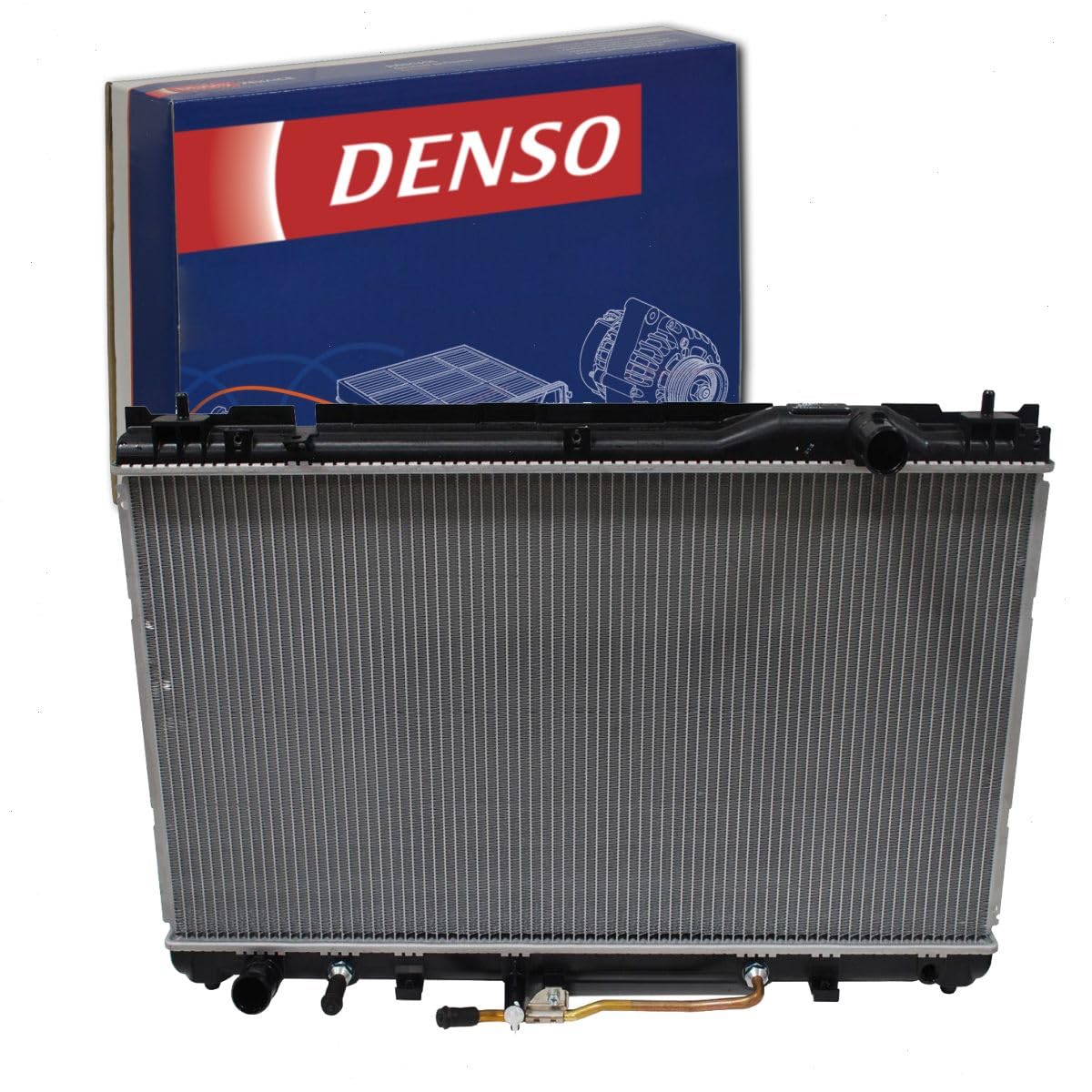
Image 1.1: The Denso 221-0503 Radiator, showcasing its core and connection points, with the Denso product packaging visible in the background.
2. Què hi ha a la caixa
Upon opening your Denso 221-0503 Radiator package, you will find the following components:
- Denso 221-0503 Radiator, New OE Quality
3. Especificacions
| Atribut | Valor |
|---|---|
| Marca | Denso |
| Número de model | 221-0503 |
| Cooler Heatsink Material | Alumini |
| Pes de l'article | 0.01 unces |
| Tipus de muntatge | Muntatge del xassís |
| Dimensions del paquet | 2.29 L x 4.782 A x 6.938 A (polzades) |
| Pes del paquet | 0.89 lliures |
| UPC | 042511174344 |
4. Configuració i instal·lació
Replacing a vehicle's radiator requires mechanical aptitude and specific tools. It is highly recommended that installation be performed by a certified professional to ensure proper function and safety. The following are general steps for radiator replacement and should not be considered a comprehensive guide:
- La seguretat primer: Ensure the vehicle is cool, parked on a level surface, and the engine is off. Disconnect the negative terminal of the battery.
- Drenatge del refrigerant: Place a drain pan under the radiator and open the drain cock to allow the coolant to drain completely.
- Traieu les mànegues i les connexions: Disconnect the upper and lower radiator hoses, transmission cooler lines (if applicable), and any electrical connections to the cooling fans or sensors.
- Remove Cooling Fans: Detach and remove the cooling fan assembly from the radiator.
- Remove Radiator: Unbolt the radiator from its mounting points and carefully lift it out of the engine bay.
- Prepare New Radiator: Transfer any necessary components (e.g., mounting brackets, sensors, drain cock) from the old radiator to the new Denso radiator.
- Instal·lar un radiador nou: Carefully lower the new radiator into position, ensuring it seats correctly in its mounts. Secure it with bolts.
- Torneu a instal·lar components: Reattach the cooling fan assembly, radiator hoses, transmission cooler lines, and all electrical connections. Ensure all clamps estan segurs.
- Recàrrega de refrigerant: Tanqueu la clau de buidatge del radiador. Torneu a omplir el sistema de refrigeració amb la barreja de refrigerant recomanada pel fabricant.
- Purgar aire: Start the engine and allow it to reach operating temperature with the heater on full. Monitor the coolant level and add more as needed to remove any trapped air from the system.
- Inspeccionar si hi ha fuites: After the engine has cooled, recheck the coolant level and inspect all connections for any signs of leaks.
Always refer to your vehicle's specific service manual for detailed, model-specific installation instructions.
5. Principis de funcionament
The Denso 221-0503 Radiator functions as a heat exchanger within your vehicle's cooling system. Hot coolant from the engine flows into the radiator's upper tank and then through a series of thin tubes and fins. As air passes over these fins, heat is dissipated from the coolant to the atmosphere, effectively cooling the fluid. The cooled coolant then returns to the engine to absorb more heat, maintaining the engine's optimal operating temperature and preventing overheating.
6. Manteniment
Regular maintenance of your cooling system, including the radiator, is crucial for vehicle longevity and performance. Consider the following:
- Comprovació del nivell de refrigerant: Regularly check the coolant level in the reservoir and the radiator (when cool) and top up as needed with the correct coolant type.
- Buidatge de refrigerant: Follow your vehicle manufacturer's recommendations for coolant flush and replacement intervals. This prevents corrosion and buildup within the cooling system.
- Inspeccionar si hi ha fuites: Periodically inspect the radiator, hoses, and connections for any signs of leaks, cracks, or corrosion. Address any issues promptly.
- Neteja les aletes del radiador: Keep the exterior of the radiator clean from debris, leaves, and insects, which can impede airflow and reduce cooling efficiency. Use a soft brush or low-pressure air/water.
- Inspecció de la mànega: Check radiator hoses for cracks, bulges, or softness. Replace them if they show signs of wear.
7. Solució De Problemes
If you experience issues with your vehicle's cooling system, consider these common troubleshooting steps:
- Sobreescalfament del motor:
- Comproveu el nivell del refrigerant.
- Inspect for coolant leaks.
- Verificar el funcionament del ventilador de refrigeració.
- Check for blockages in the radiator fins.
- Consider a faulty thermostat or water pump.
- Fuites de refrigerant:
- Visually inspect the radiator, hoses, and connections for drips or wet spots.
- Check the radiator cap for proper sealing.
- A pressure test of the cooling system can help pinpoint elusive leaks.
- Nivell baix de refrigerant:
- Top up with the correct coolant mixture.
- Investigate for underlying leaks if the level consistently drops.
For persistent or complex issues, consult a qualified automotive technician.
8. Garantia i Suport
Specific warranty details for the Denso 221-0503 Radiator are typically provided at the point of purchase or within the product packaging. Please retain your proof of purchase for any warranty claims.
For technical support, installation assistance, or warranty inquiries, please contact Denso customer service or visit the official Denso website. Contact information can usually be found on the product packaging or the manufacturer's official online resources.


