Introducció
This manual provides essential information for the proper installation, operation, and maintenance of the Hach pHD sc Online Process pH Sensor, Model DPD1P1. Please read this manual thoroughly before using the sensor to ensure safe and efficient operation.
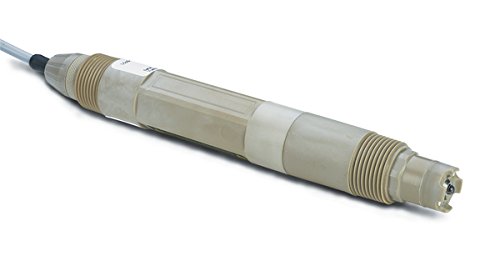
Image: The Hach pHD sc Online Process pH Sensor, Model DPD1P1, showing its robust PEEK body and cable connection. This sensor is designed for precise pH measurement in industrial environments.
Producte acabatview
The Hach DPD1P1 is a digital differential pH sensor designed for continuous online process monitoring. It features patented differential electrode technology for enhanced accuracy and reliability, minimizing junction potential and eliminating sensor ground loops. Its robust PEEK body ensures durability in aggressive chemical environments.
Característiques principals:
- Patented Differential Technology: Utilizes three electrodes for precise pH measurement and eliminates sensor ground loops.
- Extended Sensor Life: Features a replaceable salt bridge with high buffer capacity to protect the reference electrode.
- Construcció duradora: Built with PEEK material for chemical compatibility in aggressive solutions.
- Muntatge versàtil: Supports convertible, insertion, immersion, or sanitary mounts.
- Compatibilitat del sistema: Integrates seamlessly with Hach SC controllers and Claros Water Intelligence System.
Configuració i instal·lació
Proper setup is crucial for optimal sensor performance. Ensure all safety precautions are followed during installation.
Opcions de muntatge:
The DPD1P1 sensor offers flexible mounting configurations to suit various process setups:
- Convertible Mount: Standard configuration for general use.
- Insertion Mount: For direct insertion into pipelines or vessels.
- Immersion Mount: For submersion in open tanks or basins.
- Sanitary Mount: For applications requiring hygienic connections.
Refer to the specific mounting hardware instructions for detailed installation steps for your chosen configuration.
Connexió elèctrica:
Connect the sensor's 10m cable to a compatible Hach SC controller. Ensure connections are secure and follow the controller's wiring diagram. Avoid routing sensor cables near high-voltage lines or sources of electromagnetic interference.
Instruccions de funcionament
Once installed and connected, the DPD1P1 sensor operates continuously to provide real-time pH measurements.
Calibració:
Regular calibration is essential for maintaining measurement accuracy. Perform calibration according to the instructions provided with your Hach SC controller. Typically, a two-point or three-point calibration using certified pH buffer solutions is recommended.
- Prepare fresh pH buffer solutions (e.g., pH 4.01, 7.00, 10.00).
- Clean the sensor tip thoroughly with deionized water before calibration.
- Follow the calibration procedure on your Hach SC controller, immersing the sensor in each buffer solution as prompted.
- Allow readings to stabilize before accepting each calibration point.
Supervisió de dades:
pH readings are displayed on the connected Hach SC controller. Data can be logged and integrated into Hach's Claros Water Intelligence System for comprehensive process optimization and historical analysis.
Manteniment
Routine maintenance extends the life of your DPD1P1 sensor and ensures continued accuracy.
Neteja:
Periodically inspect the sensor tip for fouling or buildup. Clean the glass electrode and reference junction using a soft brush and appropriate cleaning solution (e.g., mild detergent, dilute acid, or specific Hach cleaning solutions) depending on the type of fouling. Rinse thoroughly with deionized water after cleaning.
Salt Bridge Replacement:
The replaceable salt bridge is designed to protect the reference electrode. Replace the salt bridge when it shows signs of depletion or contamination, or as part of a routine maintenance schedule. Refer to the sensor's technical specifications for recommended replacement intervals.
Emmagatzematge:
When not in use, store the sensor in a moist environment, preferably in a storage solution recommended by Hach, to prevent the glass electrode from drying out.
Resolució de problemes
This section provides guidance for common issues encountered with the DPD1P1 sensor.
| Problema | Causa possible | Solució |
|---|---|---|
| Unstable or Erratic Readings | Fouled electrode; Air bubbles on electrode; Ground loop interference; Sensor nearing end of life. | Clean electrode; Ensure proper immersion; Check electrical connections for ground loops; Replace sensor if necessary. |
| Incorrect Readings / Calibration Failure | Contaminated buffer solutions; Dirty electrode; Sensor damage; Incorrect calibration procedure. | Use fresh buffer solutions; Clean electrode thoroughly; Inspect sensor for physical damage; Re-perform calibration carefully. |
| No Reading / Sensor Not Detected | Loose cable connection; Faulty cable; Controller issue; Sensor failure. | Check and secure cable connections; Test cable continuity; Verify controller operation; Contact Hach support if sensor is suspected faulty. |
Especificacions
- Model: DPD1P1
- Tipus de sensor: Digital Differential pH Sensor
- Tipus d'elèctrode: Glass Differential Electrode
- Material del cos: PEEK®
- Opcions de muntatge: Convertible, Insertion, Immersion, Sanitary
- Longitud del cable: 10 meters (included)
- Compatibilitat: Hach SC controllers, Claros Water Intelligence System
- Dimensions (paquet): 15.2 x 10.59 x 3.39 polzades
- Pes (paquet): 2.75 lliures
- Fabricant: Hach
Garantia i Suport
For specific warranty information regarding your Hach DPD1P1 sensor, please refer to the documentation provided at the time of purchase or contact Hach customer service directly. Hach stands behind its products with decades of expertise in water quality analysis.
For technical support, troubleshooting assistance beyond this manual, or to order replacement parts, please visit the official Hach website or contact Hach customer support. Contact information can typically be found on the Hach weblloc web o a l'embalatge del producte.
Note: Always use genuine Hach replacement parts and accessories to ensure optimal performance and maintain warranty validity.


