1. Introducció i finalview
The Docooler JINGSHA X99-8D3 is a high-performance ATX gaming motherboard designed for LGA2011 V3 processors. It features four-channel DDR3 memory support, an M.2 NVME slot for high-speed storage, and multiple PCI-E expansion slots, making it suitable for demanding computing tasks and gaming setups. This manual will guide you through the installation, configuration, and maintenance of your motherboard.
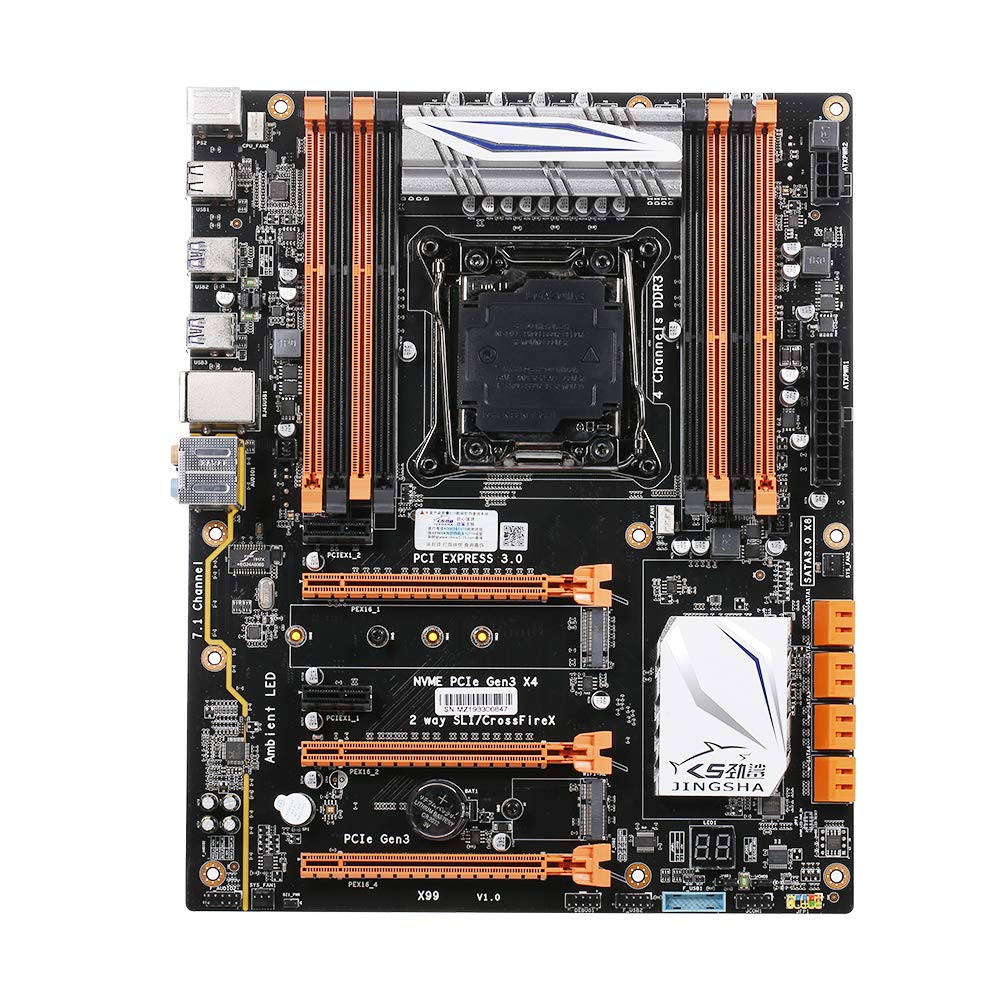
Figura 1.1: De dalt a baix view of the Docooler JINGSHA X99-8D3 Motherboard, showcasing its layout with CPU socket, RAM slots, and various expansion slots.
2. Característiques clau
- M.2 NVME Support: Equipped with an M.2 hard disk port, supporting high-speed PCI-E NVME X4 for optimal operating system and application driver performance.
- Quad-Channel DDR3 Memory: Features 8 DDR3 memory slots across 4 channels, significantly improving capacity and performance, supporting up to 256GB.
- Digital Diagnostic Card: Integrated digital diagnostic card automatically tests hardware devices to ensure proper operation and assist in troubleshooting.
- Multiple PCI-E Expansion Slots: Provides 3 PCI-E expanded slots, configurable as X16/X8 to handle various workloads and multi-GPU setups.
- Construcció duradora: Built with a 10-layer PCB and high-quality capacitors for enhanced stability and heat resistance.

Figure 2.1: Diagram illustrating the six core technologies and features of the motherboard, including 4-channel DDR3*8, M.2 hard disk interface, digital diagnostic card, 7.1 channel audio, SATA3.0*8 interface, and Crossfire support.
3. Contingut del paquet
Si us plau, verifiqueu que tots els elements que s'enumeren a continuació siguin presents al vostre paquet:
- 1x Docooler JINGSHA X99-8D3 Motherboard
- 1x cable SATA
- 1x I/O Baffle (Backplate)
- 1x CPU Fan Board
- A bag of screws
4. Especificacions
| Característica | Especificació |
|---|---|
| Model | X99-8D3 |
| Factor de forma | ATX |
| Graphic Slot | PCIE3.0 16X*3 |
| Targeta de xarxa | Targeta de xarxa Gigabit |
| Canal d'àudio | Canal 7.1 |
| CPU Type Support | LGA2011 V3 (2629V3/2649V3/2669V3/2678V3/2696V3/2676V3/2673V3) |
| Capes de PCB | 10 capes |
| Ranura de memòria | DDR3*8 |
| Capacitat màxima de memòria | 256 GB |
| Interfície SATA | SATA3.0*8, M.2 NVME |
| PS/2 Interface | Ratolí/teclat |
| Font d'alimentació | 8 PIN*1, 24 PIN*1 |
| Interfície USB | USB 3.0*6, USB 2.0*6 |
| Expanded Interface | PCIE 1X*2, M.2 WIFI*1 |
| Mida de l'article | 30.2 x 24.4 cm (11.89 x 9.61 polzades) |
| Pes de l'article | 930.5 g (32.82 oz) |

Figura 4.1: Detallada view of the motherboard's rear I/O panel, showing PS/2 ports, USB 2.0, USB 3.0, Gigabit Network Port, and 7.1 Audio Ports.
5. Configuració i instal·lació
Before beginning installation, ensure your system is powered off and unplugged from the wall outlet. Handle the motherboard by its edges to avoid static discharge.
5.1 Instal·lació de la CPU
- Locate the LGA2011 V3 CPU socket on the motherboard.
- Gently push down the CPU retention lever and swing it open.
- Align the triangular mark on your CPU with the corresponding mark on the socket. Carefully place the CPU into the socket without forcing it.
- Tanqueu la palanca de retenció per fixar la CPU.
- Apliqueu una capa fina i uniforme de pasta tèrmica a la part superior de la CPU.
- Install the CPU cooler according to its manufacturer's instructions, ensuring proper contact and pressure.

Figura 5.1: Primer pla view of the LGA2011 V3 CPU socket on the motherboard, ready for CPU installation.
5.2 Installing RAM Modules
- Obriu els clips als dos extrems de les ranures de memòria DDR3.
- Alineeu l'osca del mòdul RAM amb la clau de la ranura de memòria.
- Press down firmly on both ends of the RAM module until the clips snap into place, securing the module.
- For optimal performance, install RAM modules in matching pairs across the four channels as indicated in the motherboard manual or silkscreen.

Figura 5.2: View of the eight DDR3 RAM slots on the motherboard, showing their arrangement for quad-channel memory configuration.
5.3 Installing Storage Devices (M.2 NVME & SATA)
- SSD M.2 NVME: Locate the M.2 slot. Insert the M.2 SSD at an angle into the slot, then gently push it down and secure it with the provided screw.
- Unitats SATA: Connect your SATA SSDs or HDDs to the SATA 3.0 ports using SATA data cables. Ensure the power supply SATA power connectors are also attached to the drives.

Figure 5.3: Close-up of the M.2 interface on the motherboard, highlighting its position and the PCI-E Gen3 X4 connection for high-speed data transfer.
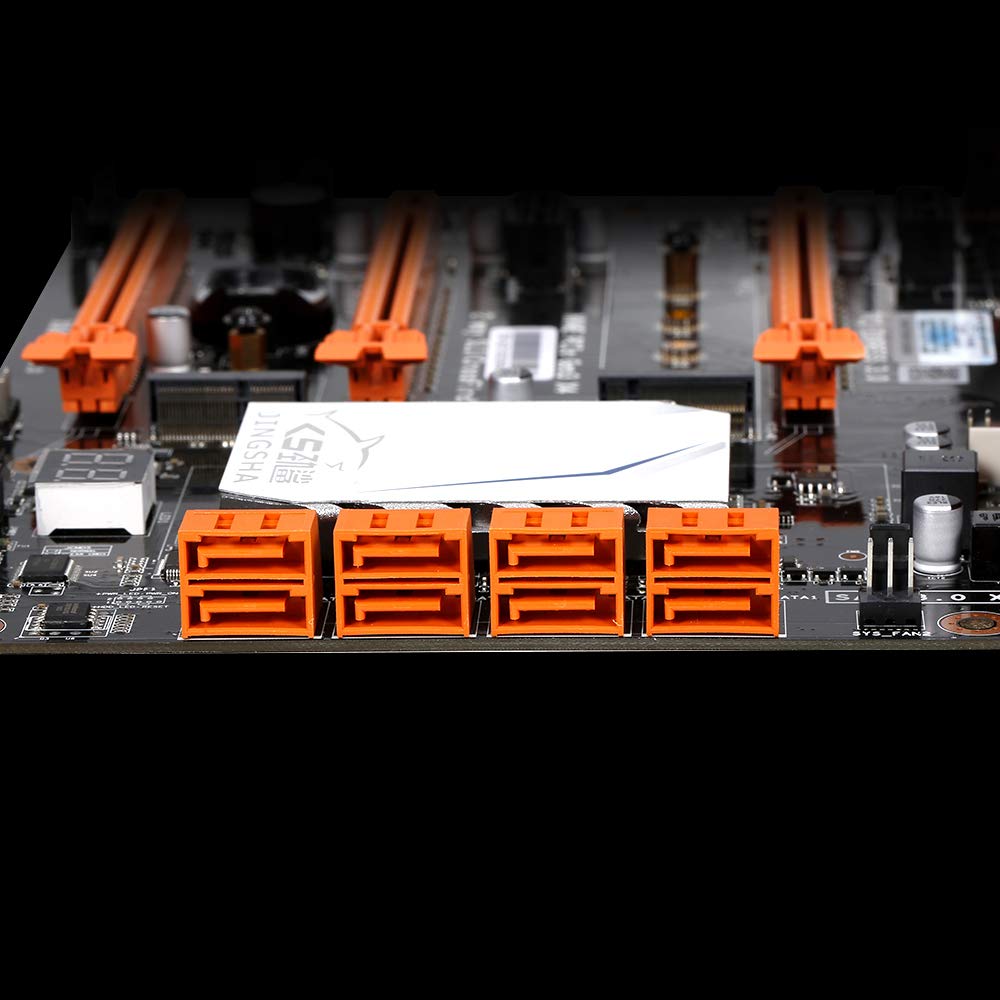
Figura 5.4: View of the eight orange SATA 3.0 ports on the motherboard, providing ample connectivity for storage devices.
5.4 Connexió de la font d'alimentació
- Connecteu el connector d'alimentació ATX de 24 pins de la font d'alimentació (PSU) al port corresponent de la placa base.
- Connect the 8-pin CPU power connector (EPS12V) from your PSU to the 8-pin port near the CPU socket.
5.5 Installing Expansion Cards (PCIe)
- Locate the desired PCI-E 3.0 x16 or x1 slots.
- Traieu la coberta de la ranura d'expansió corresponent de la carcassa del vostre PC.
- Align the expansion card with the slot and press down firmly until it is fully seated. Secure the card with a screw to the case.

Figura 5.5: Angle view of the motherboard, highlighting the three PCI Express 3.0 x16 slots and the smaller PCIe x1 slots, ready for graphics cards and other expansion cards.
6. Funcionament de la placa base
6.1 Primer arrencada i configuració de la BIOS
- Després de muntar tots els components, connecteu el monitor, el teclat i el ratolí.
- Power on your system. During the initial boot sequence, repeatedly press the DEL or F2 key (common for JINGSHA motherboards) to enter the BIOS/UEFI setup utility.
- In the BIOS, verify that all installed components (CPU, RAM, storage) are detected correctly.
- Configura l'ordre d'arrencada per prioritzar els suports d'instal·lació del sistema operatiu (unitat USB o DVD).
- Desa els canvis i surt de la BIOS. El sistema es reiniciarà.
6.2 Instal·lació del sistema operatiu
Follow the instructions provided with your operating system (e.g., Windows, Linux) to complete the installation process. Ensure you install all necessary drivers for the motherboard's chipsets, network, audio, and other components from the manufacturer's website or included driver disc.
7. Manteniment
Un manteniment adequat garanteix la longevitat i el funcionament estable de la placa base.
- Eliminació de pols: Netegeu regularment la pols de la placa base i els components amb aire comprimit. Assegureu-vos que el sistema estigui apagat i desendollat abans de netejar-lo.
- Actualitzacions de la BIOS: Periodically check the Docooler or JINGSHA official website for BIOS updates. BIOS updates can improve compatibility, stability, and performance. Follow update instructions carefully to avoid damaging the motherboard.
- Actualitzacions de controladors: Mantingueu els controladors del sistema actualitzats per garantir un rendiment òptim i la compatibilitat amb el programari i el maquinari nous.
- Condicions ambientals: Operate the motherboard in a well-ventilated environment with stable temperature and humidity to prevent overheating and component degradation.
8. Solució De Problemes
Aquesta secció tracta problemes comuns que podeu trobar.
8.1 Sense alimentació / Sense arrencada
- Ensure the 24-pin ATX and 8-pin CPU power connectors are securely plugged into the motherboard.
- Check if the power supply unit (PSU) is switched on and connected to a working power outlet.
- Verify that the front panel power button cable is correctly connected to the motherboard's header.
8.2 Sense sortida de pantalla
- Ensure your graphics card (if dedicated) is properly seated in its PCI-E slot and has all necessary power cables connected.
- Check that your monitor cable is securely connected to the graphics card or motherboard (if integrated graphics are used, though X99 typically requires a dedicated GPU).
- Try reseating your RAM modules. Incorrectly seated RAM is a common cause of no display.
8.3 POST Code Display (Digital Diagnostic Card)
The motherboard is equipped with a digital diagnostic card (POST code display) that shows a two-digit code during boot-up. Refer to the motherboard's detailed technical documentation (often available on the manufacturer's website) for a list of POST codes and their meanings. This can help pinpoint the exact component causing a boot failure.

Figura 8.1: Primer pla view showing the integrated digital diagnostic card (POST code display) on the motherboard, which assists in identifying hardware issues during boot.
9. Garantia i Suport
For warranty information and technical support, please refer to the documentation provided with your purchase or visit the official Docooler or JINGSHA weblloc web. Conserveu el comprovant de compra per a reclamacions de garantia.


